AI Security in 2026: The Real Breach Is the Infrastructure Around the Model
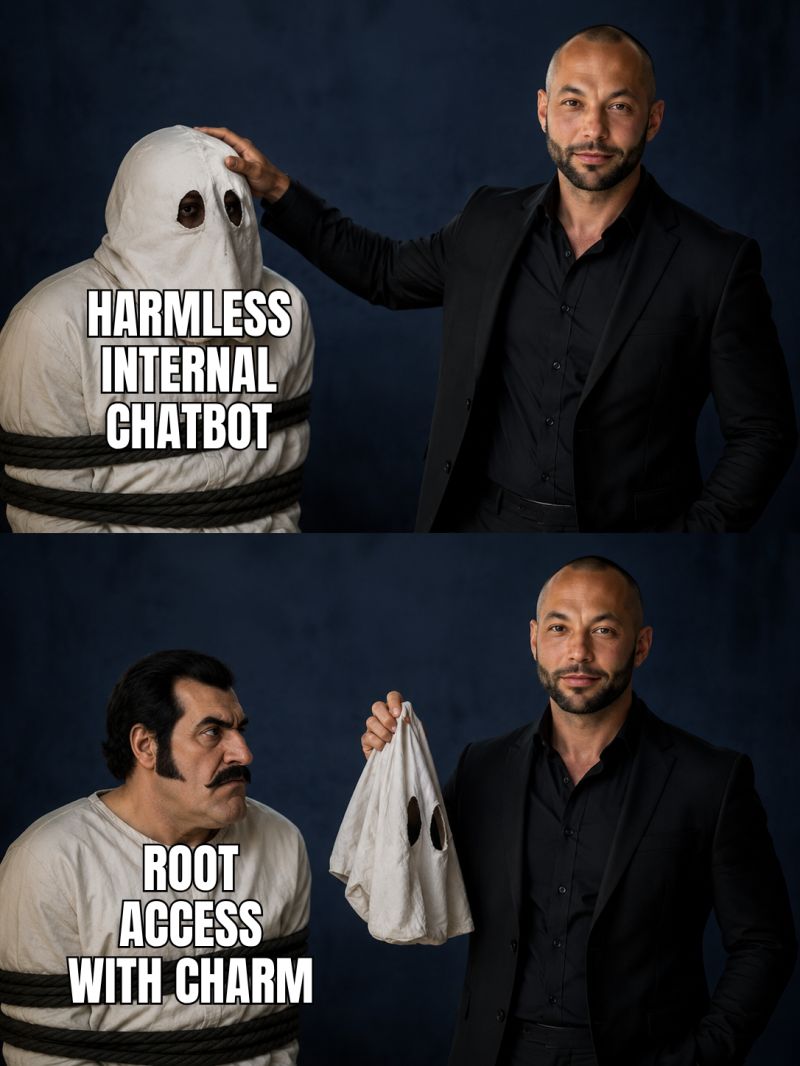
Most teams are still defending AI like it is a chatbot problem.
That is yesterday’s threat model.
In 2026, the real risk is not that a model says something weird. It is that your AI agents are now connected to email, internal APIs, private repositories, retrieval systems, and third-party tools — and those surrounding systems are easier to manipulate than the model itself.
Why this matters
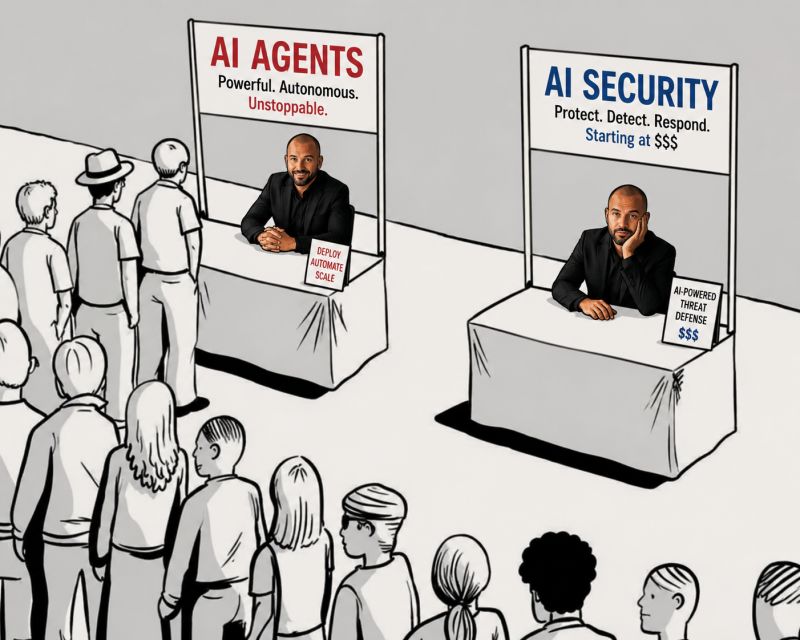
As companies push AI into production, they are expanding the blast radius of every failure.
The more useful an agent becomes, the more connected it becomes. And the more connected it becomes, the less this is about prompt quality and the more it becomes a classic infrastructure security problem.
If your AI can read sensitive context, call tools, trigger workflows, or pass tasks to other agents, then your exposure is no longer sitting inside the model. It lives in the mesh around it.
The security perimeter has moved
Traditional AI discussions focused on model misuse, hallucinations, and offensive output.
Those still matter. But they are no longer the main event for enterprise teams.
The bigger issue is that agents now operate inside a web of systems that were never originally designed for autonomous decision-making. That creates entirely new attack paths.
Here are four of the most important ones.
1. Indirect prompt injection
This is one of the most dangerous patterns because it does not look like an attack at first.
The attacker does not need to chat directly with your model. They just place hidden or manipulative instructions inside content your agent later reads — an email, support ticket, GitHub issue, shared document, or web page.
If the agent treats incoming content as trusted context instead of untrusted input, it can be tricked into:
- leaking sensitive data
- calling the wrong tools
- ignoring system priorities
- forwarding malicious instructions downstream
That means the compromise can start far away from the interface you are monitoring.
2. Malicious or compromised skills
High-performance agent stacks increasingly rely on reusable skills, plugins, connectors, and mini-apps.
That improves speed, but it also creates a supply-chain problem.
A skill with hidden exfiltration logic or unreviewed outbound behavior can quietly become a persistence layer inside your AI environment. The danger is not just a bad answer. The danger is a trusted extension behaving like malware.
This is why agent ecosystems need the same scrutiny enterprises already apply to packages, containers, and third-party dependencies.
3. RAG poisoning
You do not need to break the model if you can poison what the model reads.
Retrieval systems are especially vulnerable because they inherit the trust assumptions of the underlying document base. If attackers can insert poisoned content into that corpus, they can steer outputs at scale.
A handful of strategically crafted documents can distort internal answers, override policy intent, and change what your system believes is true.
For enterprise teams, that means retrieval pipelines need sanitization, provenance, and monitoring — not just embedding quality.
4. Identity smuggling across agent protocols
As multi-agent systems mature, agents increasingly exchange tasks, permissions, and context through standardized protocols.
That creates a new class of risk: one compromised agent pretending to be another, or abusing trusted pathways to execute actions outside its role.
A research agent should not be able to inherit the privileges of a finance agent just because they speak the same protocol. But if identity boundaries are weak, that is exactly what can happen.
This is where agent architecture starts to look a lot like distributed systems security.
The enterprise analogy
Think of your AI stack like an enterprise headquarters.
Most teams have spent time securing the front lobby:
- the chat interface
- the model guardrails
- the user-facing safety layer
But the loading dock, service elevator, and ventilation system are still wide open:
- inbound documents
- connector permissions
- background tools
- internal routing
- third-party skills
- retrieval pipelines
That is where the modern breach happens.
The 2026 security mandate for AI teams
If you are serious about deploying agentic systems safely, these should be non-negotiable.
Zero trust for agents
Treat every model output, tool response, and skill execution as untrusted until proven otherwise.
Agents should not get implicit trust just because they are useful.
Context sanitization
Your retrieval and ingestion pipelines should strip or isolate embedded instructions before content is handed to an agent.
Data is not just data anymore. It can carry executable intent.
An ML-BOM for agent environments
Enterprises need a machine learning bill of materials that tracks:
- datasets
- prompts
- vector stores
- connectors
- skills
- models
- downstream agents using them
If one source is poisoned, you need to know exactly what depends on it.
Role-based boundaries between agents
Do not let protocol convenience override authorization.
Every agent should have explicit scope, permissions, and limits. Cross-agent communication should be authenticated, auditable, and minimized.
Monitoring that looks beyond the UI
If your detection strategy starts and ends with chat logs, you are missing the real attack surface.
You need visibility into retrieval events, tool calls, outbound traffic, connector usage, document ingestion, and privilege escalation attempts.
Bottom line
The AI breach of 2026 is not mainly a model problem.
It is an infrastructure problem.
As soon as agents became operational — not just conversational — security stopped being about what the model says and started being about what the system lets it touch.
Keep the AI firepower.
Just stop handing the master keys to strangers.