Walk into almost any executive meeting right now and you will hear the same sentence:
“We need an AI strategy.”
Fair. But here is the problem. In a lot of organizations, “AI strategy” has quietly become a synonym for optics.
It is a slide deck, a press release, a new title on the org chart, and a handful of pilots that never touch the core of how work gets done.
The stats are brutal, but they are not telling the story people think they are
A survey of 2,400 global leaders shared by WRITER includes a set of numbers that should make any operator pause:
- 79% of organizations say they are struggling with AI adoption
- 54% say AI is actively tearing their company apart
- Only 29% report significant ROI from generative AI
- 69% are planning layoffs, often without a revenue plan to replace what they are cutting
Most people read that and conclude: “AI is overhyped” or “the tech is not ready.”
I think that misses the real diagnosis.
This is not a technology failure, it is a strategy failure
The companies getting “torn apart” are not being destroyed by models. They are being destroyed by the mismatch between the pace of adoption and the willingness to change the operating system of the business.
Here is what strategy theater looks like in practice:
- Announcing an initiative before you can describe the workflow it will change
- Hiring a headline role without giving it authority over data, process, and governance
- Deploying a chatbot and calling it transformation
- Measuring success as “hours saved” instead of dollars earned or risk reduced
It creates activity, not outcomes. And when outcomes do not show up, leadership blames the tool.
What the teams seeing ROI are actually doing
The 29% seeing meaningful ROI are not doing magic. They are doing fundamentals, consistently.
1) They start with work, not models
They map a real workflow end-to-end, identify the friction points, then ask where automation, decision support, or self-service will change throughput, quality, or customer experience.
In other words, they redesign how work gets done before they choose the technology.
2) They tie AI directly to revenue outcomes
Not “productivity.” Not “time saved.”
They pick a measurable business outcome, attach a number to it, and build a system to move that number.
- Faster sales cycles that convert to more closed deals
- Higher renewal rates driven by better customer support resolution
- Lower loss ratios or fewer compliance incidents
- Reduced cost-to-serve without degrading experience
Productivity can matter, but only when it is clearly connected to margin or revenue.
3) They build governance before they scale
Governance is not a committee. It is guardrails.
The winning teams define approved data sources, logging, evaluation criteria, and escalation paths early, while the system is still small enough to control.
Doing it later is why “AI” turns into a security and legal fire drill.
Why so many programs collapse into chaos
When leaders say “AI is tearing the company apart,” it is usually one of these:
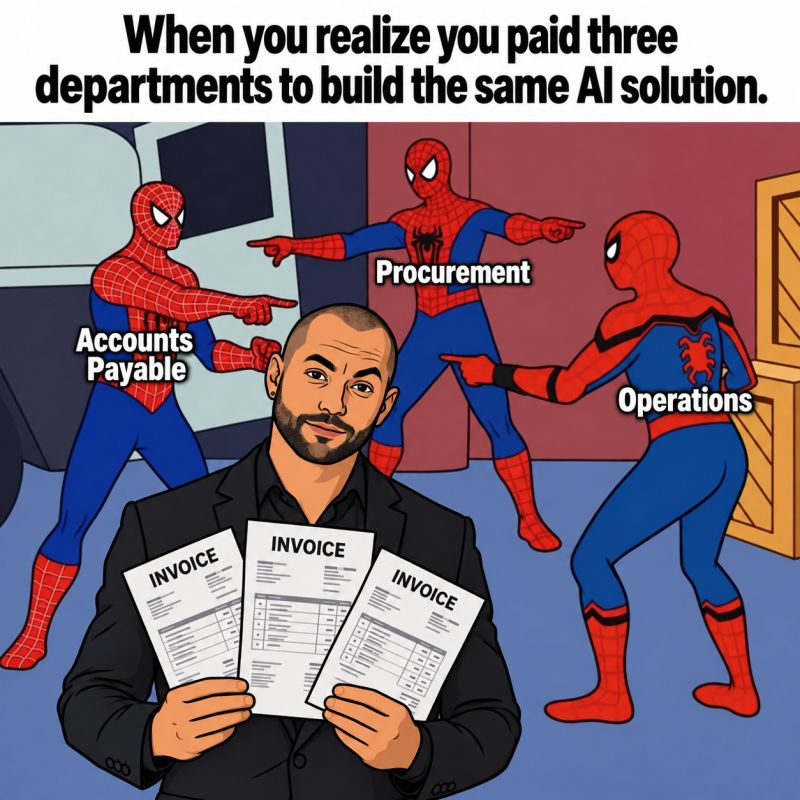
- Tool sprawl. Teams buy different platforms, wire them to different data, then everyone argues about which output is correct.
- Shadow deployments. Well-meaning people ship internal tools without consistent security, logging, or review.
- Incentive mismatch. One team is rewarded for launching pilots, another is punished for risk, and nobody owns outcomes.
- Metrics theater. Dashboards full of activity metrics that never connect to business results.
A practical reset for executives
If you want AI outcomes instead of AI optics, here is a simple operating rhythm that works:
- Pick 1 to 2 workflows that touch revenue. Something that matters, not something easy.
- Define success in dollars. Revenue, retention, margin, risk avoided. Put it in writing.
- Assign a single accountable owner. Not a committee. An owner with authority across process and data.
- Build governance as an engineering system. Approved sources, evals, logging, human review points, rollback.
- Instrument before you scale. If you cannot measure it, you cannot improve it.
The bottom line
If your AI strategy lives only in a slide deck, it is not a strategy. It is a liability.
The organizations that will be difficult to catch in 2027 will not be the ones that moved the fastest. They will be the ones that moved right, rebuilding the workflows, governance, and measurement systems that make AI compound over time.