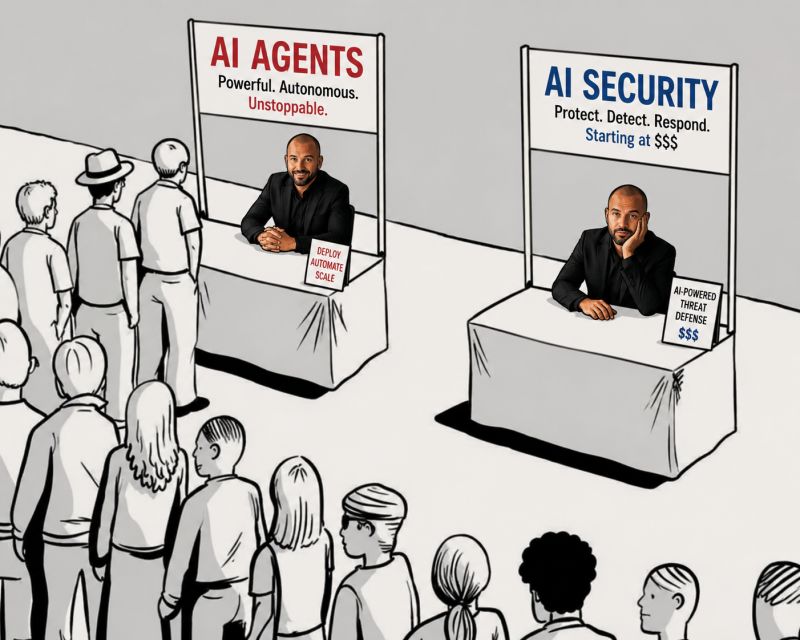
The hidden cost of AI democratization is not bad output. It is 20 teams quietly building the same thing.
That is the part companies are about to feel.
Enterprise AI tools are getting good enough that almost anyone can build something useful. A workflow. A report. A chatbot. An agent. A custom GPT. A Jira MCP. A Salesforce helper. A little “quick automation” that definitely will not become business-critical by Thursday.
This is powerful. It means more people can create, more teams can experiment, and more problems can get solved without waiting six months for a centralized roadmap.
That is the promise of AI democratization.
But there is a hidden cost: visibility.
When Everyone Can Build, Everyone Will Build
The first wave of enterprise AI was constrained by access. Most people could not build usable automation without engineering support, specialized tools, or a long intake process. That created bottlenecks, but it also created some control.
The next wave is different. Business users, analysts, operators, and technical teams can now build useful AI-enabled workflows with far less friction. They can connect tools, generate code, create agents, build internal assistants, and automate work that used to sit in backlog purgatory.
That is a good thing.
But when everyone can build, everyone will build. And if the organization does not have a way to see what is being built, it does not get coordinated innovation.
It gets invisible duplication.
The Rise of Agent Sprawl
One team builds a Jira MCP. Another team builds a slightly different Jira MCP. A third team builds one with better prompts but worse permissions. A fourth team connects it to the wrong project hierarchy.
A fifth team calls theirs “Project Intelligence Layer” because apparently we needed branding.
Now the company is paying for duplicate development time, duplicate token usage, duplicate maintenance, duplicate security reviews, duplicate workflows, inconsistent outputs, unclear ownership, and 20 versions of the same capability with 20 different failure modes.
That is not democratization.
That is agent sprawl.
And it is going to become a real enterprise problem because AI lowers the cost of building. But it does not automatically lower the cost of coordination. In many organizations, it may increase it.
The Bottleneck Is Moving
The old bottleneck was simple: Can we build this?
That question still matters, but it is no longer the only constraint. The new bottleneck is: Do we know what everyone is building, whether it already exists, who owns it, and whether it is safe to use?
This is a very different leadership problem.
It is not just about funding projects. It is about managing an expanding internal ecosystem of tools, agents, workflows, prompts, connectors, data products, and automations. Some will be experiments. Some will become production systems accidentally. Some will quietly become essential to how a team operates before anyone outside the team knows they exist.
That last category is where risk starts to compound.
Why Invisible AI Work Becomes Expensive
Invisible AI work creates several problems at once.
- Duplication: Multiple teams solve the same problem separately, each maintaining its own version.
- Security drift: Similar tools end up with different permissions, different data access, and different risk profiles.
- Inconsistent outputs: Two agents answering the same business question may use different logic, context, or definitions.
- Unclear ownership: Nobody knows who is responsible when the workflow fails, the model changes, or the underlying API breaks.
- Hidden operating costs: Token usage, maintenance, retraining, support, review, and governance effort spread across the organization without a clear view.
None of these issues mean companies should stop people from experimenting. That would be the wrong lesson.
The lesson is that democratization needs visibility. Otherwise, innovation turns into chaos with a better UI.
The Answer Is Governance, Not Centralized Control
The goal is not to drag every AI idea back into a central approval committee where good ideas go to become Q3 initiatives.
The goal is to create the conditions where teams can build quickly without accidentally recreating the same capability, violating the same policy, or introducing the same risk in five different places.
The companies that get this right will create shared capability layers:
- Reusable MCPs and connectors
- Approved tools and patterns
- Common workflows
- Permission models
- Usage visibility
- Internal registries
- Governance patterns
- Clear owners
- Retirement paths
That is not bureaucracy. That is how you keep speed from turning into sprawl.
What Leaders Should Be Asking
As AI becomes easier to build with, leaders need better questions.
- What AI tools and agents already exist across the organization?
- Which ones are experimental, and which ones are production-critical?
- Who owns each capability?
- Which systems and data sources can they access?
- Where are teams duplicating the same work?
- What should become a shared service or reusable capability?
- How do teams discover what already exists before building something new?
- How do outdated agents, automations, and connectors get retired?
These are not theoretical governance questions. They are operating model questions. They determine whether AI democratization creates leverage or fragmentation.
The Real Goal
The goal is not to prevent people from building.
The goal is to prevent every department from accidentally becoming its own tiny software company with a token budget.
AI democratization is good. It gives more people the ability to solve problems, automate tedious work, and create useful systems closer to where the work actually happens.
But democratization without visibility becomes sprawl. Sprawl creates duplication. Duplication creates cost. Cost creates governance panic. Governance panic creates the kind of centralized control everyone was trying to avoid in the first place.
The better path is visibility first, governance by design, and shared capability layers that make the right thing easier to reuse than rebuild.
Because the future of enterprise AI will not just be about who can build the most agents.
It will be about who can coordinate them.