Enterprise AI is about to rediscover an old lesson from the cloud era: abundance feels amazing until someone leaves all the lights on.
Remember when we told everyone the cloud was limitless?
Move the data there. Run the jobs there. Scale the workloads there. Let teams move faster.
And honestly, it worked.
Until someone left a recurring ETL job running all weekend and Finance started asking questions in a tone normally reserved for crime documentaries.
That is where we are heading with tokens.
Tokens Feel Small Until the Architecture Gets Big
Right now, tokens still feel like a technical detail. A token is just the unit of text an AI model processes. Prompts use tokens. Documents use tokens. Context windows use tokens. Agent retries use tokens. Tool calls use tokens. Meeting transcripts use tokens.
Individually, none of this feels like a big deal.
That is the trap.
Cloud compute felt cheap too, until every team had a cluster, every workflow had a schedule, every dashboard had a refresh, and every experiment became production because “people were using it.”
Very familiar plot.
AI tokens are following the same path. First comes experimentation. Then adoption. Then automation. Then agents.
Then suddenly you have 14 workflows, 6 copilots, 3 internal assistants, and one agent stuck in a retry loop reading the entire company wiki to answer: “Where is the Q3 template?”
That is not intelligence.
That is a very expensive scavenger hunt.
The Issue Is Not That Tokens Cost Money
The issue is not that tokens cost money. Every useful enterprise system has a cost. Cloud compute costs money. Data storage costs money. SaaS seats cost money. API calls cost money.
The issue is that token usage reveals how disciplined your AI architecture actually is.
Bad AI systems waste tokens because they are compensating for weak design. They shove everything into context. They use the biggest model for every task. They retrieve too much data. They retry without stopping conditions. They duplicate the same workflow across teams. They ask the model to reason through problems that should have been solved with better data, rules, or process design.
That waste is not just a cost problem. It is an architecture signal.
When a system burns tokens to overcome unclear context, missing business logic, bad retrieval, weak routing, or unmanaged agent behavior, the token bill is not the root problem. It is the smoke alarm.
Token Discipline Is the New AI Operating Discipline
Good AI systems are different.
They route work intelligently. They use the right model for the task. They retrieve only the context that matters. They cache what repeats. They summarize memory intentionally. They set clear stopping conditions. They measure cost against business value.
That is the real conversation.
Not token maxxing. Not token shortages. Token discipline.
Token discipline does not mean starving teams of AI access. That would be the wrong lesson. It means designing systems that know when to spend tokens, where to spend them, and what outcome the spend is supposed to produce.
A support workflow that uses more tokens but resolves customers faster may be a great investment. An internal agent that burns through context because it cannot find the right source document may be architectural waste. A coding assistant that increases accepted pull requests may justify the spend. A coding assistant that increases review rejections is just producing cleanup work with a token budget.
The number alone does not tell the story. The outcome does.
Access Was the First Wave. Efficiency Is the Next One.
The first wave of enterprise AI was about access: who can use the tools?
The next wave is about efficiency: what are they using them for, what value is being created, where is usage wasteful, which workflows are worth scaling, and which ones are just burning tokens in a trench coat?
Because “just put everything in the prompt” is not a strategy. It is the AI version of “just move it all to the cloud.”
Useful at first. Expensive when nobody owns the architecture.
Enterprises need the same maturity around AI usage that they eventually had to build around cloud usage: visibility, ownership, routing, limits, governance, measurement, and cost-to-value accountability.
The Questions Leaders Should Be Asking
Leaders do not need to become token accountants. But they do need to understand the operating questions behind token usage.
- Which workflows consume the most tokens?
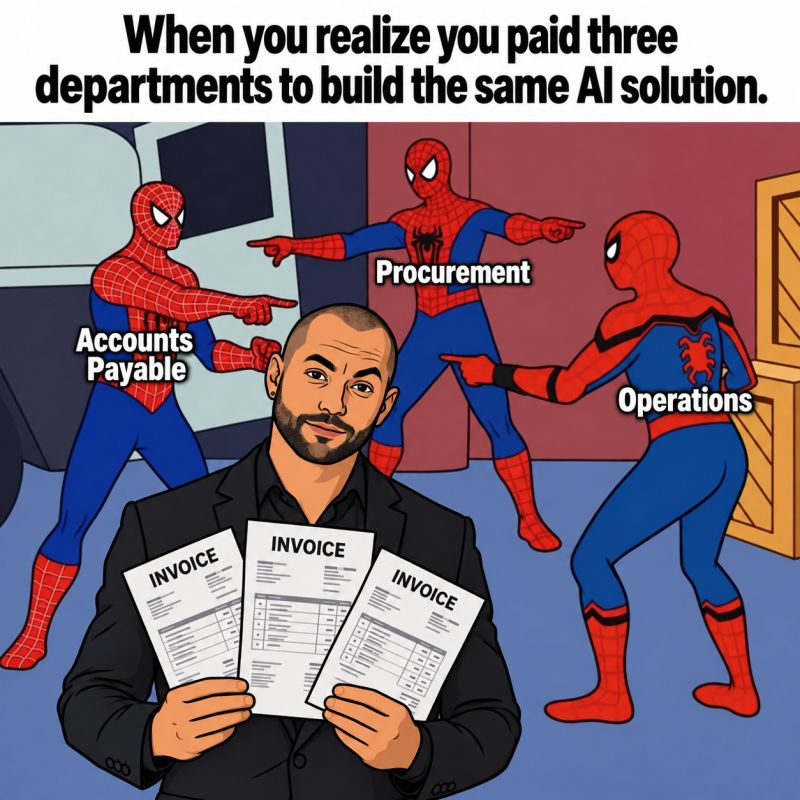
- Which teams are duplicating similar AI capabilities?
- Which agents are retrying too often?
- Which use cases require expensive frontier models, and which do not?
- Which retrieval flows are pulling too much irrelevant context?
- Which AI costs are tied to measurable business outcomes?
- Which AI costs are simply symptoms of poor architecture?
Those questions are where token discipline becomes business discipline.
The New Unit Economics of Knowledge Work
Tokens are becoming the new unit economics of knowledge work.
They are not just a technical cost. They are a signal of how work is being redesigned, how context is being managed, how agents are being governed, and how much discipline exists beneath the demo.
If token spend is going up because teams are producing better work, resolving issues faster, making better decisions, and reducing rework, that is a good problem to manage.
If token spend is going up because systems are bloated, duplicated, poorly routed, and retrying forever, that is not AI transformation. That is cloud sprawl with better autocomplete.
The lesson from the cloud era still applies.
Abundance is useful. Ownership is mandatory.
Ignore tokens long enough and Finance will explain the architecture to you.