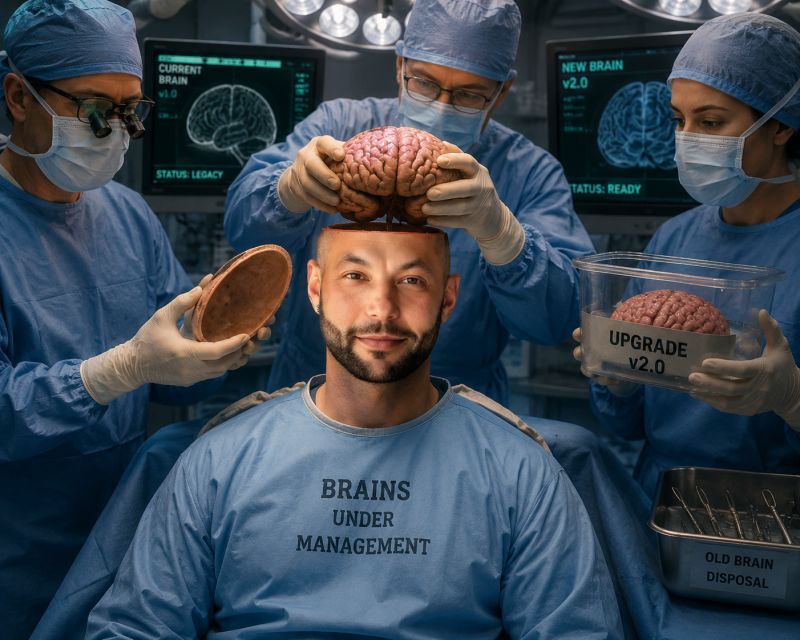
In your AI solution, a new model can improve your benchmark and break your workflow at the same time.
That is why AI regression testing is going to become a much bigger deal.
Most companies still treat an AI-model change like a standard application update. A newer model benchmarks better. The context window is larger. It is cheaper, faster, or comes with a compelling new vendor feature. Great—swap it and ship it.
That logic works poorly when the software is making judgments inside a business workflow.
AI systems do not only change at the interface. They change in behavior.
The system can still work and still be wrong
After a model, prompt, retrieval method, tool, or workflow change, the agent may still answer the question. The workflow may still run. The API may still return a 200.
But something underneath can change:
- It asks fewer clarification questions.
- It interprets a policy differently.
- It summarizes a contract with more confidence than the evidence supports.
- It selects a different tool or retrieves a different document.
- It skips a review step the prior version usually respected.
- It becomes more “helpful” in exactly the way Legal hates.
That is regression.
It just does not always look like a bug.
Traditional regression testing exists because a new feature can break something that used to work. Enterprise AI needs the same discipline, but its tests have to account for behavior—not just whether a function completed.
A new model can be better overall and worse for your workflow.
Better reasoning does not always mean better compliance. Lower cost does not always mean acceptable quality. Faster responses do not always mean safer decisions. More autonomy does not always mean better outcomes.
Define what “still works” means
Before changing anything in an AI workflow, the team needs a practical answer to one question: what must remain true for this workflow to be trustworthy?
The answer is specific to the job the agent is doing.
For a customer-support agent
“Still works” might mean it follows refund policy, escalates angry customers, does not invent account history, and asks for confirmation before sending a consequential response.
For a legal assistant
It might mean the assistant flags risky clauses, cites the source language, avoids overconfident summaries, and does not turn “review” into “approve.”
For a data agent
It might mean the agent uses certified metrics, respects row-level permissions, explains assumptions, and does not quietly switch from trusted data to convenient data.
Those are not generic model-quality measures. They are operating requirements. They define whether the AI behaves correctly inside the workflow where people, customers, data, policy, and money are affected.
Move from benchmark testing to behavioral testing
Benchmarks matter, but they are not a release plan. A benchmark can tell you whether a model improved on a broad capability. It cannot tell you whether that model will preserve the judgment, constraints, escalation patterns, and trust boundaries your organization depends on.
A mature AI-release process should include:
- Golden test cases: real, representative scenarios with known acceptable outcomes.
- Edge-case libraries: ambiguous, adversarial, high-stakes, and policy-sensitive situations that expose behavioral drift.
- Side-by-side comparisons: evaluate the current and proposed model on the same tasks before cutover.
- Workflow simulations: test the whole chain—retrieval, tools, permissions, prompts, approvals, and handoffs—not the model in isolation.
- Human review for high-risk changes: especially where outputs affect customers, contracts, compliance, safety, or financial decisions.
- Post-release monitoring: watch for drift after deployment, not just failures during testing.
This is not bureaucracy. It is basic production discipline.
The brain of the workflow changed
Organizations are becoming comfortable with the idea that models will improve frequently. That is good news. Better models create real opportunity.
But an AI agent is not a static component. It is a decision-making layer embedded in an operating process. When that layer changes, the organization needs to validate more than uptime, latency, cost, or a headline benchmark.
It needs to validate trust.
The companies that win with AI will not be the ones that adopt every new model first. They will be the ones that can adopt new models without breaking the workflows people rely on.
Because if your AI system touches customers, contracts, code, data, money, policy, or decisions, changing the model is not a casual upgrade.
You changed the brain of the workflow.
Test that it still behaves the way you expect.