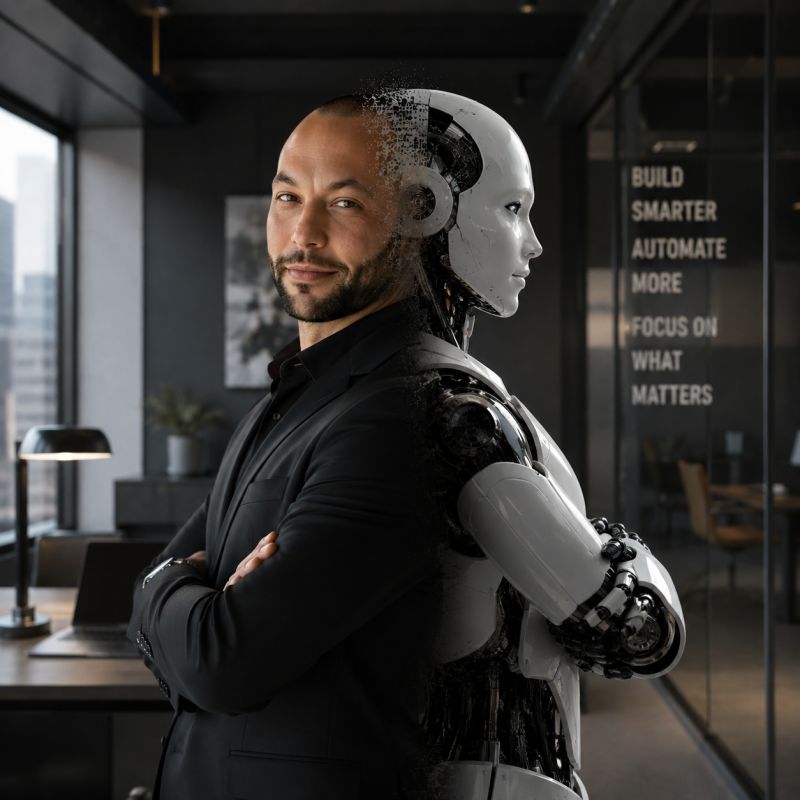
Forward deployed engineers are becoming one of the most important roles in the AI era.
But they also reveal something important:
AI adoption is not just a product problem.
It is an organizational change problem.
Companies like OpenAI, Anthropic, Palantir, and other AI-native companies are investing in forward deployed engineers because powerful technology does not create value by itself. The product can be impressive. The model can be capable. The demo can look like the future. But none of that guarantees the technology will actually change how work gets done inside an enterprise.
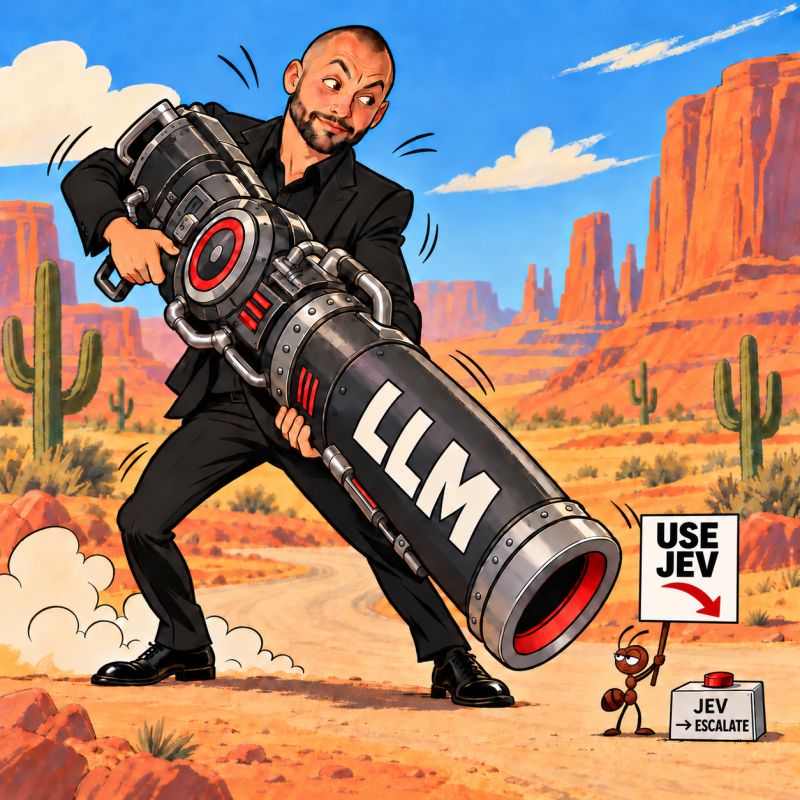
That is why the forward deployed model matters. It is a market signal that AI companies understand something many organizations are still learning: implementation is not a handoff. It is a translation problem.
What forward deployed engineers actually do
A forward deployed engineer sits close to the customer. They are not just building features in isolation, and they are not just giving a generic product walkthrough. They are embedded near the real business problem.
They help translate a platform into real-world use cases. They prototype quickly. They connect technical capability to business workflows. They help teams move from “this is interesting” to “this is working.”
In practice, that means they often operate across several roles at once: engineer, solution architect, product strategist, technical translator, and implementation partner. They understand what the product can do, but they also spend time understanding what the customer is trying to accomplish.
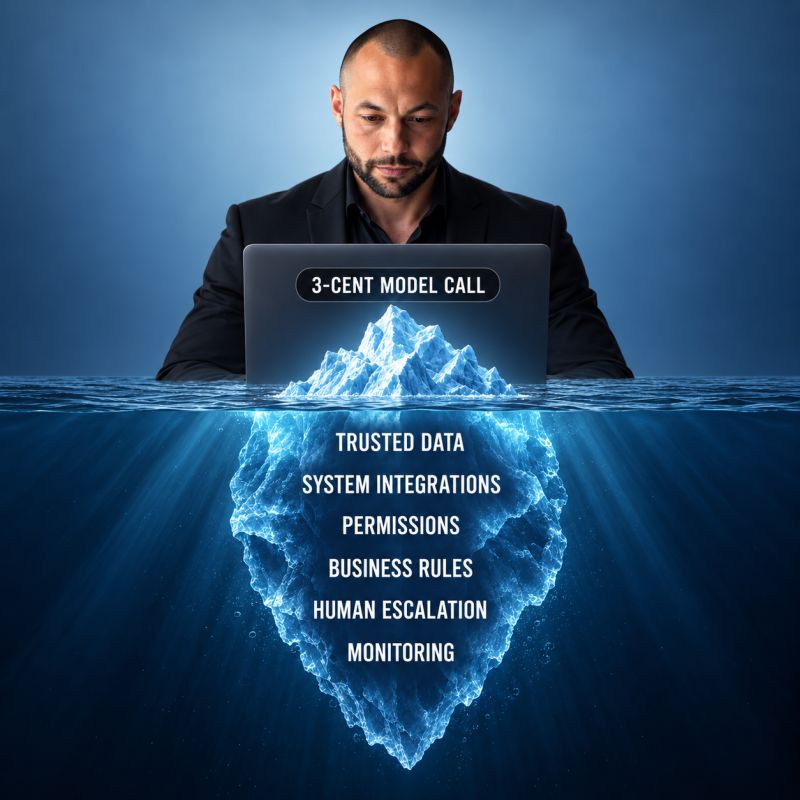
That role matters because AI platforms are not self-implementing. A powerful model does not automatically become a trusted workflow. An agent does not automatically become a governed operating process. A new capability does not automatically become measurable business value.
Someone has to close that gap.
Why AI adoption needs more than technical implementation
The mistake many companies make is assuming the hard part is choosing the right AI tool.
That is part of the work, but it is rarely the whole problem. The harder challenge is changing how the business operates around that tool.
Most organizations do not just need help using a platform. They need help answering bigger questions:
- What workflows should change?
- Which use cases actually matter?
- How should teams be trained?
- Who owns the new process?
- What governance is required?
- How do we measure success?
- How do we get people to trust the system?
- How do we prevent AI from becoming another disconnected pilot?
These are not side questions. They are the difference between a useful AI solution and a technical artifact that never gets adopted.
An AI assistant people do not trust will not be used. An automation that does not fit the workflow will be bypassed. A dashboard that does not change a decision is just decoration. An agent without governance is a risk. A pilot without adoption is theater.
Where consultants and strategic partners fit
Forward deployed engineers are valuable because they help bring technology closer to the customer.
But they are not the whole picture.
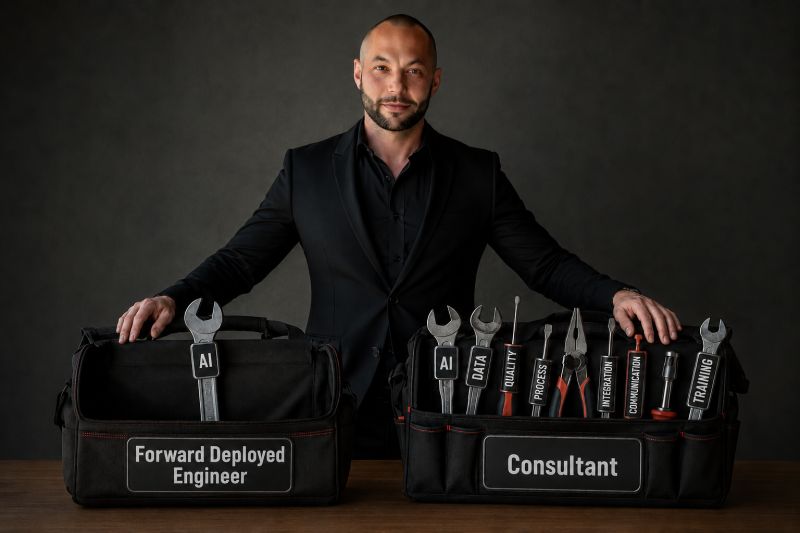
A forward deployed engineer is usually focused on making a specific platform successful inside the customer’s environment. That is important work. But a strong consultant or strategic partner is focused on making the organization successful across platforms, workflows, people, governance, adoption, and measurement.
That difference matters.
Organizations do not transform because a vendor ships a capability. They transform when that capability is connected to a real business problem, embedded into a workflow, trusted by users, governed appropriately, measured against outcomes, and supported through change.
That is where consultants and strategic partners still play a critical role. Not as people who simply recommend tools from the outside, but as operators who help the organization absorb the change.
The missing gap is organizational absorption
Enterprise AI work requires more than technical implementation. It requires business context, workflow redesign, stakeholder alignment, change management, data strategy, governance, adoption planning, measurement, executive communication, and technical execution.
That combination is where the real value gets created.
Without it, AI projects tend to get stuck in the same pattern: the proof of concept works, the team is impressed, the executive sponsor likes the demo, and then the solution struggles to become part of normal operations.
The problem is not always the technology. Sometimes the organization simply has not changed enough for the technology to matter.
That is the gap many companies underestimate. They think they are buying intelligence. What they actually need is a way to redesign work around new intelligence.
The future of AI services is hybrid
The future of AI services will not be pure consulting.
And it will not be pure software.
It will be the combination of technical depth, business strategy, and organizational change.
Forward deployed engineers are a sign of where the market is moving. They show that AI companies know customers need help turning platforms into outcomes. But enterprises also need partners who can look beyond one platform and help design the operating model around the technology.
That is the work.
Not just building the solution.
Making sure the solution is understood, adopted, governed, measured, and embedded into the way the organization actually runs.
That is where real value gets created.