OpenAI’s enterprise-agent push is not killing AI services.
It is showing the world why enterprise AI services exist.
Whenever a major AI company launches an enterprise platform, the same prediction appears almost immediately: “The middleman is gone. Consultants are done. Every company can now click deploy and become an AI-native organization before lunch.”
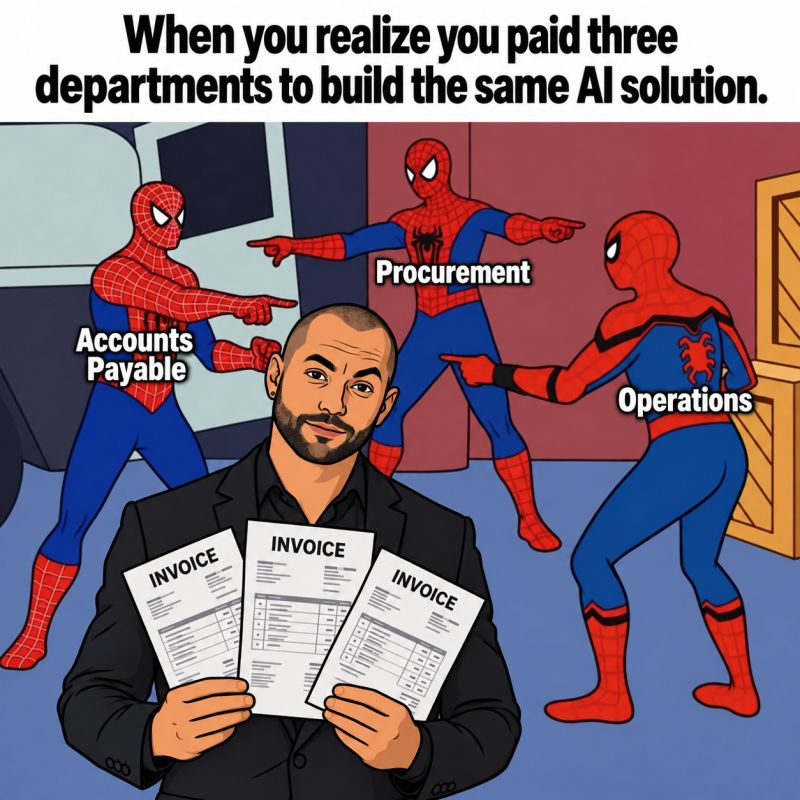
That is a fun story. It is also how people end up with a production agent, three disconnected systems, and a meeting titled Why Did It Email Finance?
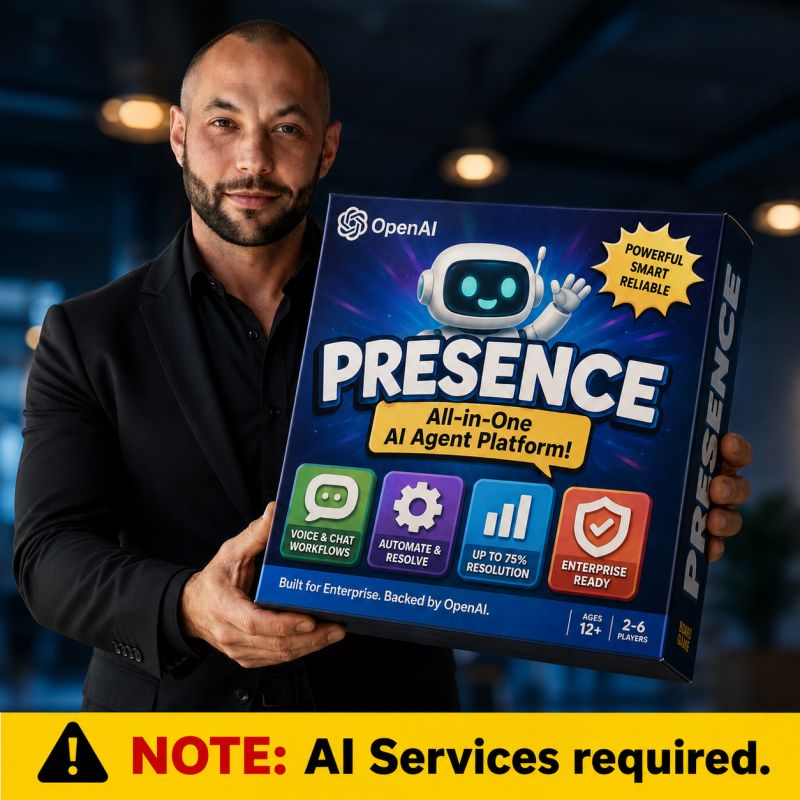
The latest debate centers on OpenAI Presence, an enterprise agent platform positioned for voice and chat workflows. The implication is clear: if a platform can resolve customer issues and automate work, perhaps organizations no longer need implementation partners, domain experts, or teams that understand how work actually gets done.
I think the opposite is true.
Enterprise AI platforms do not remove the need for implementation. They make the need impossible to ignore.
Great AI software still has to meet a real business
There is a major difference between proving that an agent can handle a support conversation and making it reliable inside a real company.
A real enterprise environment has customer records spread across systems, policies that are not as clear as anyone claims, permissions that cannot be ignored, exceptions nobody documented, and legacy processes held together by tribal knowledge and one spreadsheet named FINAL_v7_REALLY_FINAL.xlsx.
That is not a technology failure. It is the environment technology has to work in.
For an AI agent to create value, it must do more than produce a polished answer. It has to:
- Understand the workflow it is entering
- Use the right data and respect permissions
- Apply policy consistently
- Know when to act, escalate, or stop
- Integrate with the systems where work happens
- Give people a way to review, correct, and trust it
- Produce a measurable business outcome
A platform can provide the engine. It cannot automatically map every company’s roads, traffic laws, potholes, and executive detours.
Forward deployed engineers are evidence, not a contradiction
One of the most revealing parts of the enterprise AI market is the rise of the forward deployed engineer.
These are technical operators who work closely with customers to turn a powerful platform into a working solution. Part engineer, part solution architect, part product strategist, they help connect technology to real use cases.
Their existence answers an important question: if enterprise AI were truly self-implementing, why would the AI companies need people embedded with customers to make it work?
They would not.
Forward deployed engineers are not proof that services are disappearing. They are proof that the market has finally admitted implementation is part of the product.
And that work is broader than turning on a platform.
A vendor-aligned implementation team is usually focused on making its platform successful. A strong enterprise transformation partner has a different job: making the organization successful across platforms, workflows, stakeholders, data, governance, adoption, and change.
Both can be valuable. They are not interchangeable.
The real work begins after the demo
Most AI demos are persuasive because they remove the inconvenient parts of enterprise life.
No conflicting source systems. No unclear policy. No row-level security. No exception queue. No angry customer who has already called three times. No legal team asking what happens when the agent is confidently wrong.
Then the platform enters production and meets all of them at once.
That is when organizations need implementation capability: people who can redesign workflows, define decision rights, connect trusted data, build guardrails, train employees, establish ownership, and measure whether the new way of working is better than the old one.
This is why the most important enterprise AI question is not, “Can this agent do the task?”
It is, “Can we make this agent reliable enough to trust inside this workflow?”
AI services are being raised, not replaced
As enterprise AI platforms become more capable, expectations will rise with them.
Boards will ask for agent strategies. CFOs will ask where automation can improve economics. CISOs will ask what new access paths and risks are being created. Business leaders will ask why the system works somewhere else but not inside their process.
Those are not reasons to slow down. They are reasons to get serious about the implementation layer.
The winning organizations will not be the ones that buy the most impressive platform. They will be the ones that combine capable technology with practical operating-model work:
- Start with a workflow worth improving. Define the decision, handoff, or customer experience that needs to change.
- Design governance into the system. Establish permissions, escalation paths, auditability, and human review before scale creates risk.
- Build around trusted business logic. An agent needs more than data. It needs approved definitions, policies, and context.
- Make ownership explicit. Someone must own outcomes after the system goes live, not merely the launch announcement.
- Measure what changed. Track quality, cycle time, cost, customer experience, risk reduction, or capacity—not just prompts and logins.
The technology is getting better quickly. That is good news.
But an enterprise agent is not a box you open, plug in, and hand the master keys to. It is a new worker inside a living organization.
It needs a job description, boundaries, training, supervision, and a clear definition of success.
That is not a side service around enterprise AI.
That is how enterprise AI becomes useful.