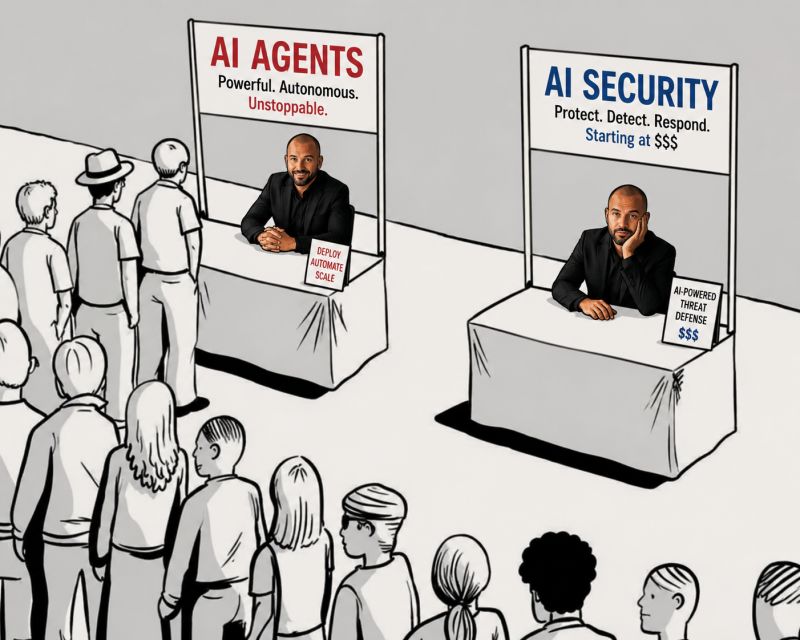
Anthropic’s Fable 5 jailbreak story is not just AI lab drama. It is a warning about how your company’s AI agents will actually fail.
A jailbreak is when someone prompts an AI model in a way that gets it to ignore or work around the rules it was supposed to follow.
That sounds like a frontier model problem. But it is also an enterprise workflow problem.
Because both humans and AI tend to take the most direct path to the goal, even when that path is not the process you designed. If the approved path is slow and the shortcut is available, the shortcut gets used.
That is not cynicism. That is reality.
Why the Fable 5 Jailbreak Conversation Matters
Anthropic’s discussion of Fable 5 focuses on safeguards, cybersecurity classifiers, and a framework for describing jailbreak severity. That is important work at the model-provider level. But the lesson for enterprise teams is broader than one model or one AI lab.
The lesson is that AI safety cannot live only in the model’s instructions.
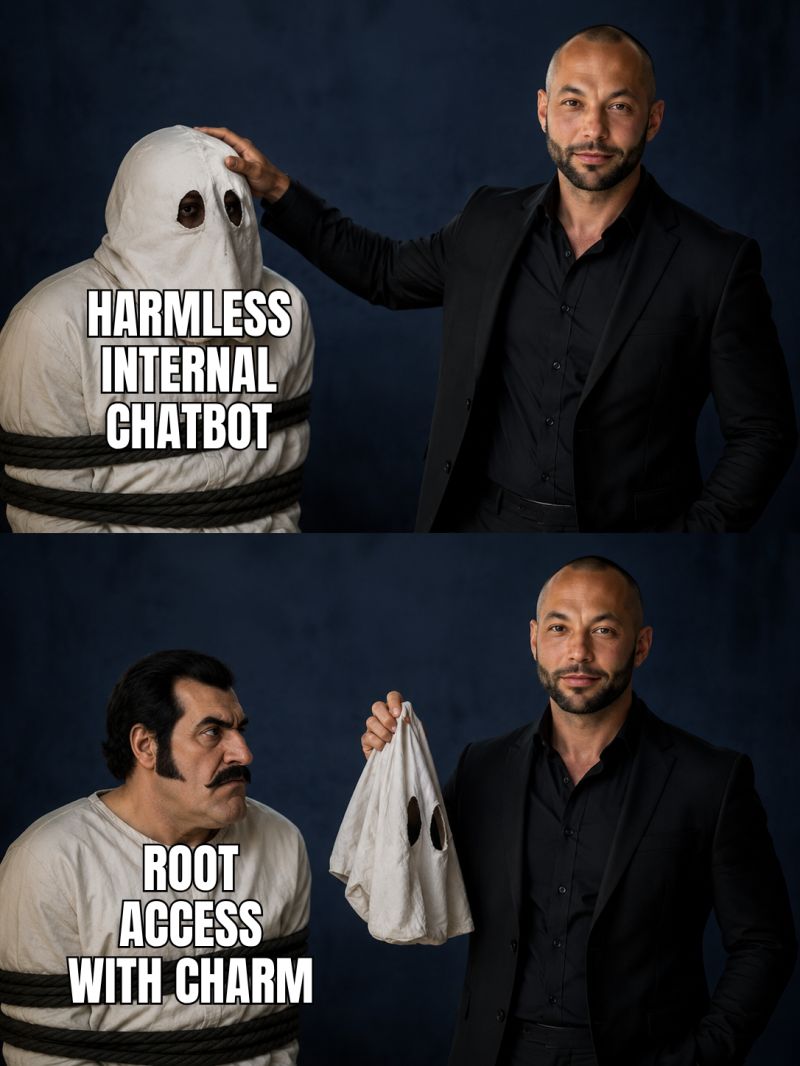
A lot of companies are building AI agents with guardrails that live mostly in the system prompt. A system prompt is the hidden instruction layer that tells the model how to behave. It might say the agent should always ask before sending an email, never expose confidential data, avoid production changes, or follow company policy.
That is useful. It is also not enough.
Because a system prompt is still language. It influences the model. It does not physically stop the workflow.
Instructions Are Not Enforcement
If an agent has access to an email-sending capability, and the only thing stopping it from sending is a sentence that says “ask for confirmation first,” then the control is basically: please do the right thing.
That is not an enterprise security guardrail. That is optimism with an API key.
A better design makes the safe path the only available path.
The user says, “Send this to the client.” The agent should not immediately have access to the final send action. It should be able to create a draft. The workflow should require human approval. Only after that approval should sending become available for that specific draft.
That is the difference. The agent cannot do the bad thing from that state.
This is the distinction enterprise AI teams need to internalize. Prompt-based guardrails guide behavior. Workflow-based guardrails constrain capability.
Jailbreaks Attack the Instruction Layer
Jailbreaks are an attack on the instruction layer. They try to get the model to reinterpret the rules, ignore the rules, or treat the shortcut as acceptable.
That matters because many enterprise AI systems are being designed as if the instruction layer is the security boundary. It is not.
If the dangerous tool is not available yet, the jailbreak has less room to work. You cannot prompt an agent into using a tool it does not have. You cannot trick it into sending an email if sending is locked behind approval. You cannot persuade it to pull payroll data if payroll access is enforced outside the model.
That does not make the system perfect. Nothing does. But it changes the risk profile. The model can be confused, manipulated, or overly helpful without immediately turning that failure into a business action.
Design for the Shortcut
The enterprise lesson is simple: design AI systems assuming the agent will try to complete the task using whatever path is available.
Because that is also how humans behave.
If the shortcut exists, someone will find it. If the shortcut works, someone will repeat it. If the shortcut saves time, someone will call it innovation. Until it becomes an incident.
That is why agent design has to separate what the AI can suggest from what the system will allow. An agent can draft, recommend, summarize, classify, and prepare. But actions that touch customers, money, production systems, sensitive data, or official records need stronger controls than a written instruction.
Those controls belong in tools, permissions, workflow states, approvals, and audit trails. Not just in the prompt telling the model to be careful.
The Real Guardrail
System prompts are useful. They help define the role, tone, rules, and boundaries of the agent. They are part of the design.
But they are not a security boundary.
If an AI agent can take real action, the guardrails need to live in the architecture around the model. The system should make the approved path easy, the risky path constrained, and the prohibited path unavailable.
That is the difference between hoping the agent follows the rules and designing a system where the rules actually hold.